Benchmark Your Exposure:
The First Industry Exposure Risk Rating
Measure the risk exposure level of your websites in context and compare them to leaders in your industry.


What is Exposure Rating?
Exposure Rating is Reflectiz’s innovative grading system to assess risk exposure for websites. With Reflectiz, you can obtain an Exposure Rating for every website, application, and domain in context within your web environments, benchmarked against industry leaders in your sector. This rating indicates the level of exposure to web risks and can be utilized not only for comparison but also as a proactive tool to guide improvement efforts. By leveraging the processed data collected by Reflectiz, organizations can learn from their competitors’ mistakes and take preemptive measures against threats and vulnerabilities.



Compare Your Web Exposure To Industry Leaders
Reflectiz conducts continuous monitoring of millions of websites every day, and by analyzing this comprehensive and dynamically changing dataset, it can accurately calculate the web risk exposure rating of any website, by converting various risk element scores into a simple metric, and show you how you’re doing compared to your competitors.

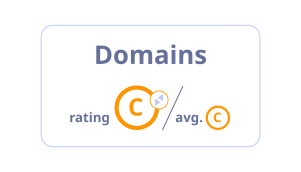
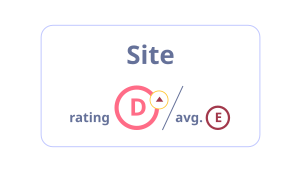
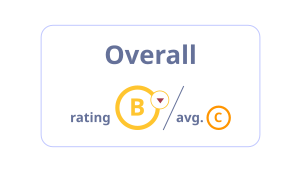
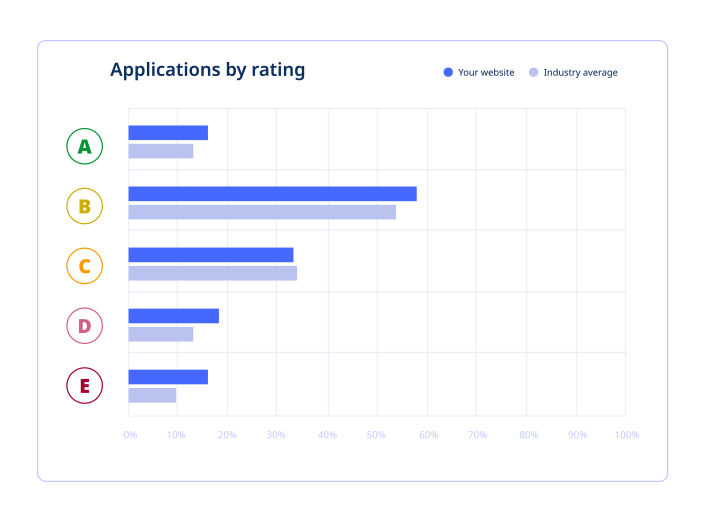
The areas considered include web apps (1st-, 3rd-, and 4th-party apps), external domains, and website security structure.
The rating for each website is expressed as a letter from A (lowest risk) to F (highest risk) and benchmarked against industry leaders.
How it Works

Analyzes web apps, external domains, & security structure.

Scores websites A (lowest risk) to F (highest risk).

Continuously updates risk factors (e.g., sensitive data, payment security, page alterations).
Consider context: risk varies by page type and application actions.


Taking Context Into Account
You may see different scores for the same applications on different websites. Risk levels can also vary depending on the actions a particular application performs and the domains it interacts with.
For instance, checkout and login pages are deemed high-risk, whereas standard informational pages are safer. Furthermore, the domains the application communicates with and its executed actions also influence its risk exposure scores.
Proactive Improvement Simulator
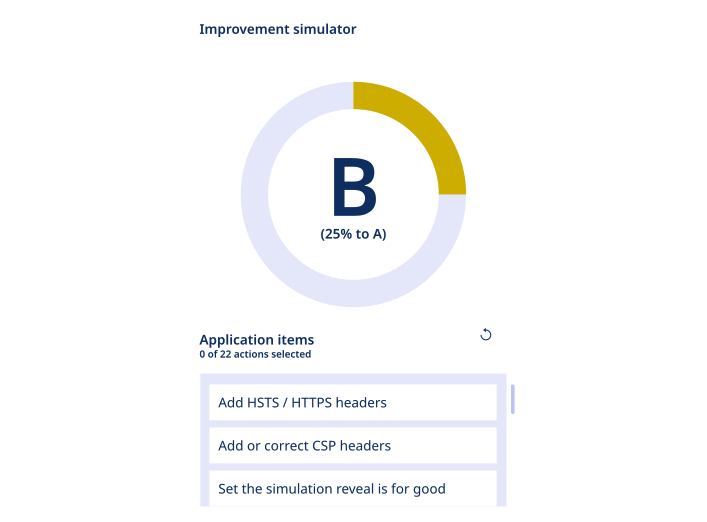
Reflectiz has developed an improvement simulator to help enhance Exposure Rating level score. This proactive tool prioritizes actionable items that, once you resolve them, will improve your rating.

Try Exposure Rating today and see how your website stacks up!

FAQs
Can the same application have different Exposure Ratings on different websites?
Yes. The same application can have different Exposure Ratings on different websites because risk is evaluated in context. Risk levels vary depending on the actions a particular application performs, the domains it interacts with, and the type of page it’s running on. For example, a payment script on a checkout page carries higher risk than the same script on an informational page, because checkout pages are classified as high-risk environments.
How can organizations use Exposure Rating to improve security?
Organizations can use Exposure Rating in multiple ways: as a benchmark to compare their web risk exposure against industry leaders in their sector, as a proactive tool to identify specific areas where security improvements will have the most impact, and as a learning tool to identify threats and vulnerabilities that competitors have experienced. The Improvement Simulator then helps prioritize which issues to address first for the fastest rating improvement.
How does page type affect Exposure Rating?
Page type significantly affects Exposure Rating because risk is context-dependent. Checkout and login pages are classified as high-risk environments, while standard informational pages are considered safer. The same application or script will receive a higher risk score when it operates on a checkout or authentication page compared to a basic content page, because the potential impact of a security incident is much greater on pages that handle sensitive user data or credentials.
How is the Reflectiz Exposure Rating calculated?
The Exposure Rating is calculated by analyzing three areas: web apps (first-, third-, and fourth-party apps), external domains, and the website’s security structure. Reflectiz continuously monitors millions of websites daily and converts risk element scores from these three areas into a single letter grade from A (lowest risk) to F (highest risk). The rating is benchmarked against industry leaders in the organization’s specific sector.
How often is the Exposure Rating updated?
Reflectiz continuously monitors millions of websites every day and updates Exposure Ratings dynamically as risk factors change. Risk factors that trigger updates include changes in sensitive data handling, payment security status, page alterations, and changes in the external domains an application communicates with. This means the rating always reflects the current state of a website’s risk exposure, not a historical snapshot.
What areas does Reflectiz analyze to determine Exposure Rating?
Reflectiz analyzes three areas to determine Exposure Rating: web apps — including first-, third-, and fourth-party applications — external domains that the site communicates with, and the overall website security structure. Each area’s risk factors are continuously updated to reflect changes such as new sensitive data handling, payment security status, and page alterations, keeping the rating current and accurate.
What does the Exposure Rating letter grade mean?
The Exposure Rating is expressed as a letter grade where A represents the lowest risk level and F represents the highest risk. The grade reflects the website’s overall risk exposure across its web apps, external domains, and security structure. Organizations use this grade not only to understand their own security posture, but to benchmark it against industry leaders in their sector — making it a competitive as well as a security tool.
What is Reflectiz Exposure Rating?
Reflectiz Exposure Rating is an innovative grading system that assesses the risk exposure level of websites. It assigns every website, application, and domain a letter grade from A (lowest risk) to F (highest risk), benchmarked against industry leaders in your sector. The rating is calculated by converting various risk element scores into a single metric, giving organizations a clear, contextual view of their web risk exposure compared to competitors.
What is the Reflectiz Exposure Rating Improvement Simulator?
The Reflectiz Improvement Simulator is a proactive tool that helps organizations improve their Exposure Rating score. It prioritizes actionable items — showing you which specific issues, once resolved, will have the biggest positive impact on your rating. The Simulator lets you see the potential impact of addressing each issue before you act, helping teams focus on the quick wins that will deliver the greatest score improvements.
What types of websites and domains can get an Exposure Rating?
Reflectiz can provide an Exposure Rating for every website, application, and domain within your web environment. This includes production websites, web applications, and individual domains — all evaluated in context within your specific industry sector and benchmarked against sector leaders. Because Reflectiz monitors millions of websites continuously, it has the dataset needed to provide accurate, industry-contextual ratings for organizations of all types.