New Webinar: Closing the Approval Gap in AI-Era Ad Tech


A single approved marketing tag can quietly load fourth-party code your security team has never seen, granting full access to your forms, customer data, and checkout pages. This on-demand webinar reveals how this Approval Gap forms, and gives your team the blueprint to close it before an auditor, regulator, or attacker finds it first.
The Reality of the Approval Gap
It’s a pattern every security and IT team recognizes:
You ran the security review. You approved the vendor. You moved on.
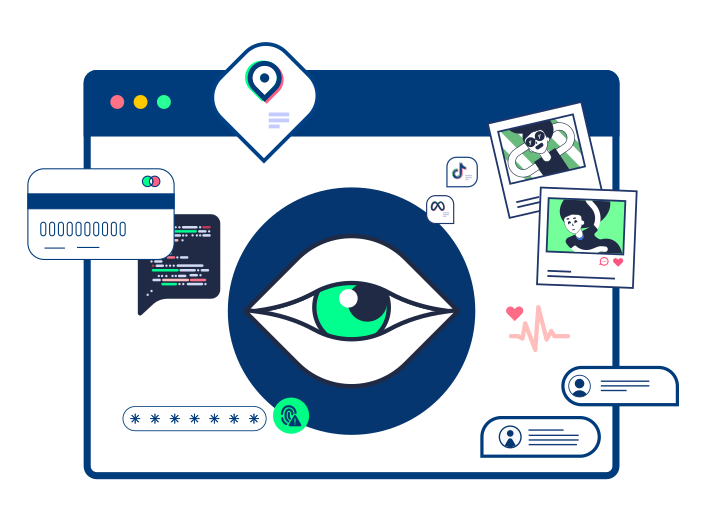
But the marketing tag you signed off on rarely stays the same as the tag executing in your users’ browsers. One approved vendor loads another. That one loads more, and within a few hops, your site is executing fourth-party scripts no one on your team has ever vetted. Because they run client-side, they have the same access to your forms, checkout fields, and customer data as the code your own engineers wrote.
This is the Approval Gap: the distance between what security signed off on and what is actually running on your site right now.
Two Sides of the Same Table: Reflectiz & Taboola
This isn’t just an advertiser problem; it’s a challenge that responsible ad tech platforms actively work to solve. Taboola’s content discovery platform reaches 600 million daily active users across 9,000 publisher partners, which means its own code is precisely the kind of third-party script a security team needs to vet before letting it near a checkout page.
In this webinar, Reflectiz co-founder and CEO Idan Cohen and Taboola’s Director of Product Omri Ariav break down the problem from both sides of the table.
Ariav likens Taboola’s code to a houseguest, one the host is entitled to watch: “We believe that we are guests on the publisher’s or advertiser’s landing page. And we need to behave.”
But he’s also clear that good behavior isn’t a one-time promise: “The initial approval is not the finish line. You need a continuous way of monitoring, sandboxing, and ensuring they’re meeting a good security standard. One check is not enough.”
The Five Indispensable Questions
So how do you close the Approval Gap? Start by setting a high bar for your digital supply chain. Idan lays out the five indispensable ad tech questions you need to ask every marketing vendor, and says they should be able to answer them before their code touches your site.
As he puts it, “A vendor that can’t answer the questions isn’t malicious, but it’s unmonitored, and unmonitored means risk.”
The first is deceptively simple: what other code does your tag load, and who vetted it? Idan walks through all five in the session. Ask them today, and most vendors will stumble on at least one, giving your team immediate, actionable risk intelligence.
Why AI Is Accelerating the Threat
This visibility matters more than ever. AI-driven ad tech spins up new integrations, endpoints, and data flows at machine speed, so the approval you granted last quarter describes a stack that no longer exists. At the same time, AI is making browser abuse cheaper, faster, and accessible even to the non-technical attacker.
The data backs this up. According to Reflectiz’s State of Web Exposure Report 2026, 53% of retail risk exposures stem from the excessive use of tracking tools. This points to a structural problem: when different departments have different priorities, who actually owns the responsibility?
Marketing adds tags quickly because it values speed. Security reviews code carefully because it values thoroughness. The undisclosed sub-calls that appear in the gap between those two approaches belong to no one, which is exactly why they slip past firewalls, WAFs, and point-in-time code review. A script that was clean at approval can change the day after.
The fix is not to slow marketing down or to treat ad tech as the enemy. It’s to add continuous, deep visibility.
What You Will Walk Away With
- The Fourth-Party Chain: How a single approved marketing tag spawns a cascade of third- and fourth-party scripts your security team never reviewed.
- The AI Acceleration: Why AI-driven ad tech is expanding your client-side attack surface faster than point-in-time audits can catch.
- The Compliance Reality: Where regulators now look first, and how GDPR, CCPA, and PCI DSS 4.0.1 Requirements 6.4.3 and 11.6.1 apply to the vendor scripts already running on your site.
- The Benchmark for Trust: What transparent, security-forward ad tech looks like in 2026, and how to tell which of your vendors meet the bar.
- Your 3-Step Playbook: A practical framework to inventory, monitor, and govern your web supply chain without creating operational friction.
Who Is This For?
- CISOs and application security leaders looking to eliminate client-side blind spots
- Privacy and compliance teams navigating evolving mandates
- Digital and marketing technology leaders who want to deploy tools safely and fast
- Anyone responsible for what runs on their organization’s websites
If your approved vendor list no longer reflects what is actually running in users’ browsers, this session is for you.
Your marketing tags are already live on your pages. Do you know what they are really doing right now?
Don’t wait for a failed audit or a skimmed checkout page to expose the gap.
FAQs
How can I see what third-party scripts are actually running on my website?
One-time audits are not enough because scripts change constantly. Continuous client-side monitoring maps every first-, third-, and fourth-party script on your site, baselines expected behavior, and alerts on changes such as new endpoints or access to sensitive form fields. This is the approach Reflectiz uses to close the Approval Gap without slowing marketing down.
How do GDPR, CCPA, and PCI DSS apply to third-party marketing scripts?
Regulators increasingly look at client-side code first. GDPR and CCPA hold you accountable for how vendor scripts collect and share customer data on your pages, while PCI DSS 4.0.1 Requirements 6.4.3 and 11.6.1 require you to inventory, authorize, and monitor all scripts on payment pages and to detect unauthorized changes.
How does AI increase ad tech security risks?
AI-driven ad tech creates new integrations, endpoints, and data flows at machine speed, so the vendor stack you approved last quarter may no longer exist. At the same time, AI makes browser-based attacks cheaper, faster, and accessible to non-technical attackers. Both trends widen the Approval Gap faster than point-in-time audits can close it.
Is ad tech like Taboola safe to run on my website?
Responsible ad tech vendors treat themselves as accountable guests on your pages. Taboola’s Director of Product Omri Ariav puts it this way: “We believe that we are guests on the publisher’s or advertiser’s landing page. And we need to behave.” He also stresses that initial approval is not the finish line, and that vendors should support continuous monitoring rather than one-time checks.
What are fourth-party scripts?
Fourth-party scripts are code loaded by your third-party vendors rather than by your website directly. One approved marketing tag can load another vendor, which loads more, and within a few hops your site is executing scripts nobody on your team has vetted. Because they run client-side, they get the same access to your forms, checkout fields, and customer data as your own code.
What does the Reflectiz-Taboola webinar cover?
Reflectiz co-founder and CEO Idan Cohen and Taboola’s Director of Product Omri Ariav explain how the Approval Gap forms, why AI is accelerating client-side risk, the five questions to ask every marketing vendor, how GDPR, CCPA, and PCI DSS 4.0.1 apply to vendor scripts, and a practical 3-step playbook to inventory, monitor, and govern your web supply chain. The session is available on demand.
What is the Approval Gap in web security?
The Approval Gap is the distance between the third-party code your security team approved and what is actually running on your website right now. A marketing tag that passed a security review can quietly change or load new vendors later, so the version executing in users’ browsers rarely matches the version you signed off on.
What questions should I ask an ad tech vendor before their code touches my site?
Reflectiz CEO Idan Cohen lays out five indispensable questions in the Reflectiz-Taboola webinar, starting with the most revealing one: what other code does your tag load, and who vetted it? As Cohen puts it, a vendor that can’t answer the questions isn’t malicious, but it’s unmonitored, and unmonitored means risk.
Who owns third-party script risk: marketing or security?
In many organizations, neither, and that is the structural problem. Marketing adds tags quickly because it values speed, while security reviews code carefully because it values thoroughness. The undisclosed sub-calls that appear between those two workflows belong to no one. According to Reflectiz’s State of Web Exposure Report 2026, 53% of retail risk exposures stem from the excessive use of tracking tools.
Why are approved marketing tags still a security risk?
Because approval is a point-in-time snapshot, not a guarantee. A script that was clean at review can change the day after, adding new endpoints and undisclosed sub-calls. These changes execute in the user’s browser, so they slip past firewalls, WAFs, and periodic code reviews that only inspect what you deployed, not what vendors deliver later.
Subscribe to our newsletter
Stay updated with the latest news, articles, and insights from Reflectiz.
Related Articles



AI Has Changed The Web.
Are You Ready for What’s Next?
Third-party code shifts by the hour. Supply-chain compromises strike without warning. AI-driven web attacks now evolve faster than traditional security can ever keep up.
Reflectiz delivers the continuous, real-time visibility needed to expose the risks traditional tools miss entirely.
Zero code changes. Zero access to your data. Ultimate peace of mind.