Strengthen Control and Governance of Your Web Presence
The first asset management solution for websites

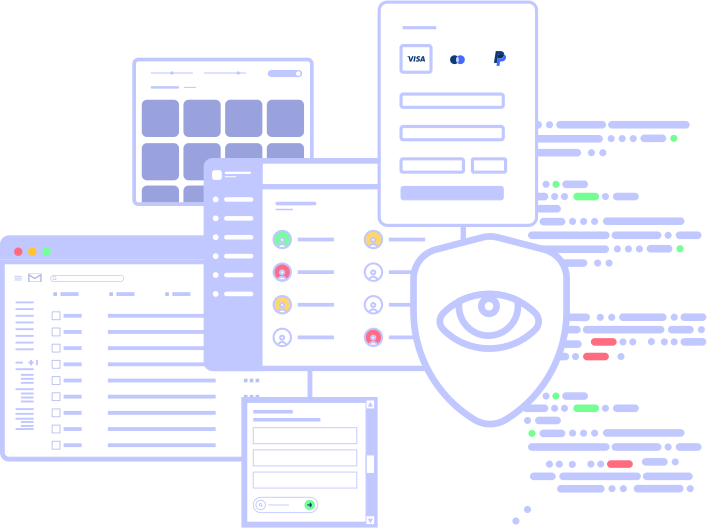
Ensuring Security and Compliance in Large-Scale Global Organizations
Managing complex, large-scale organizations that operate across continents with diverse web assets and multiple teams requires strong internal and external governance procedures. Limited visibility into the company’s web assets can create significant security challenges and compliance risks. This can lead to undetected cyberattacks and compromised company data, potentially causing devastating consequences.
Govern All Web Assets From One Centralized Dashboard
Reflectiz offers a comprehensive view of all your organization’s public web assets, keeping you in control and preventing miscommunication between security, privacy, marketing, digital and compliance teams.
Its dynamic map displays all websites under your organization’s control and responsibility:
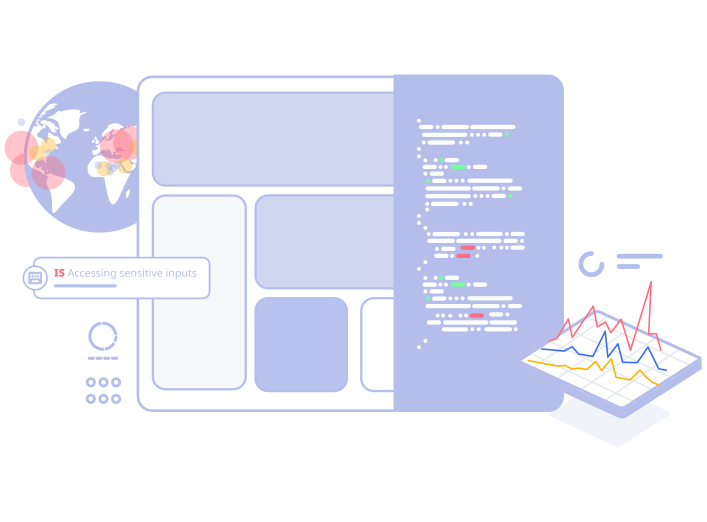
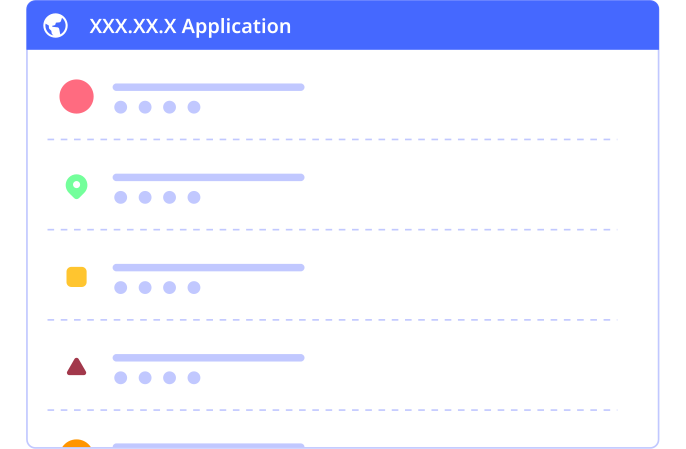
All third-party vendors associated with your websites across all regions and the code they are using.
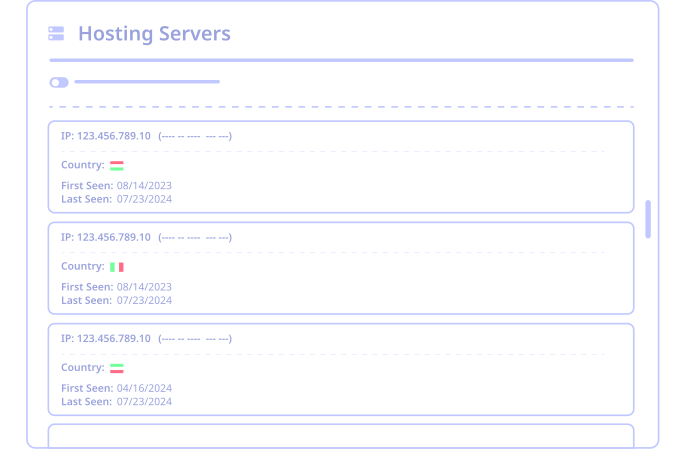
All external servers communicating with your websites, including cloud buckets, public hosting, and third-party vendors.
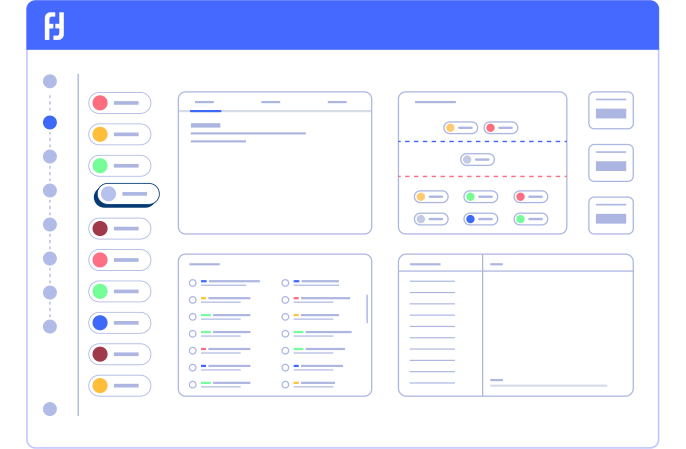
Monitor all activities between your website, your third-party vendors, and the servers within (and outside) your ecosystem.
The Power of Web Asset Management


“We wanted a lightweight tool that could give us security insights into the code and applications deployed at all our key sites and I didn’t see too many out there. We looked at Reflectiz and thought, well, that’s going to be something that can give us that ability to rapidly and easily get us that continual oversight”.
Jamie Rossato, Lion’s CISO
Learn more about Reflectiz and gain complete control over your web assets today!

FAQs
How does Reflectiz classify and prioritize risk exposure across web assets?
Reflectiz classifies and prioritizes risk exposure across web assets through its dynamic Risk Exposure Overview feature, which provides a continuously updated picture of the organization’s overall web risk profile. Each identified risk factor — such as a misconfigured script, an unauthorized data-collecting tracker, a vulnerable third-party component, or a server communicating with unexpected destinations — is automatically classified by category and assigned a priority level based on its potential impact. This enables security teams to focus remediation efforts on the highest-risk assets first, rather than trying to investigate every finding equally. The risk classifications are applied consistently across all websites in the organization’s portfolio, providing a standardized view of security posture across different regions, brands, and subsidiaries without requiring manual risk assessment for each individual asset.
How does Reflectiz detect unsecured applications or servers in a web ecosystem?
Reflectiz detects unsecured applications or servers in a web ecosystem by continuously mapping all server communications and external connections made by websites under monitoring. When a website script or application communicates with a server — including cloud buckets, public hosting services, and third-party vendor infrastructure — Reflectiz records and analyzes that connection. Any server that appears unexpectedly, lacks proper security configurations, or is associated with known malicious infrastructure gets flagged in the asset inventory. Reflectiz also detects when servers that were previously not communicating with the website suddenly appear in the data flow, indicating a potential supply chain compromise or unauthorized integration. This continuous server discovery process ensures that shadow IT and forgotten web assets don’t create undetected attack surfaces in the organization’s web ecosystem.
How does Reflectiz help manage web assets across multiple regions and subsidiaries?
Reflectiz helps organizations manage web assets across multiple regions and subsidiaries by providing a single, centralized view of all websites under the organization’s governance umbrella, regardless of where they are hosted or operated. The platform’s dynamic map displays every website associated with the organization — including regional sites, subsidiary brands, and partner-operated properties — along with all their third-party vendors and server dependencies. This is particularly valuable for global enterprises where different teams in different regions may manage separate web properties using different vendors and technology stacks. Reflectiz provides unified risk visibility across all these properties, enabling the central security and compliance team to enforce consistent governance standards without requiring hands-on coordination with each regional or subsidiary team individually.
How does Reflectiz provide centralized web asset management for enterprise organizations?
Reflectiz provides centralized web asset management through a single dashboard that displays all of an organization’s public web assets, including all websites under the organization’s control, all third-party vendors associated with those websites across all regions, all external servers communicating with the websites, and all web interactions between the website, vendors, and servers. The dashboard is dynamic, continuously updating to reflect the real-time state of the web environment. It covers subsidiaries, regional properties, and third-party related entities — giving enterprise security, privacy, compliance, and marketing teams a unified view of all web properties and their associated risks. This eliminates the information silos that typically exist between teams managing different parts of a large organization’s web presence.
How does Reflectiz’s web asset management work without installing code on websites?
Reflectiz’s web asset management operates entirely through remote, agentless monitoring — no code installation is required on any of the monitored websites. The platform scans websites externally, analyzing their publicly visible behavior, scripts, server communications, and data flows from the outside. This agentless approach is what makes Reflectiz practical for large enterprises managing dozens or hundreds of websites: there’s no deployment process, no compatibility concerns, and no performance impact on the monitored properties. Security teams can gain deep insights into code and applications deployed across all their web properties without needing access to each site’s codebase or infrastructure. As Jamie Rossato, Lion’s CISO, noted, Reflectiz provides the ability to rapidly and easily get continual oversight without a heavyweight integration process.
What is a web asset inventory and how does Reflectiz build one automatically?
A web asset inventory is a comprehensive catalog of all web properties, third-party scripts, external servers, and application components associated with an organization’s online presence. Reflectiz builds this inventory automatically through continuous external monitoring, without requiring manual input or code installation. The platform discovers and catalogs every script, pixel, tag, and application active on monitored websites, along with all their upstream server connections and downstream fourth-party dependencies. It tracks each asset’s behavior over time, flags new additions, and records changes — creating a living inventory that always reflects the current state of the web environment. The inventory includes all vendors associated with the websites across all regions, all external servers they communicate with, and the complete web interaction map between the site, its vendors, and the broader ecosystem.
What is the role of third-party vendors in web asset management security?
Third-party vendors are one of the primary sources of web asset security risk because they deploy code directly on an organization’s websites through analytics tools, advertising platforms, tag managers, customer service widgets, and other integrations. Each vendor introduces their own code dependencies and server communications, creating a complex web of relationships that extends far beyond the organization’s direct control. In web asset management, understanding vendor relationships means knowing not just which vendors are present on which websites, but also what code they deploy, what servers they communicate with, and what fourth-party services they in turn rely upon. Reflectiz maps all these relationships automatically, showing a comprehensive picture of every vendor associated with every website across all regions — enabling security teams to assess third-party risk systematically and act on it before breaches occur.
What is web asset management and why do large organizations need it?
Web asset management is the practice of maintaining comprehensive visibility and governance over all of an organization’s public-facing web properties, including websites, subdomains, third-party scripts, external servers, and the applications running across them. Large organizations need it because they typically operate multiple websites across different regions, brands, and subsidiaries, making it easy to lose track of all the web properties and their associated third-party dependencies. Without centralized web asset management, security gaps go undetected, third-party vendors operate without oversight, and compliance risks accumulate invisibly. Reflectiz provides the first dedicated asset management solution for websites, offering a centralized dashboard that governs all web assets from one place — eliminating miscommunication between security, privacy, marketing, digital, and compliance teams.
What security risks come from poor web asset visibility in large organizations?
Poor web asset visibility in large organizations creates multiple serious security risks. Unsecured or forgotten web applications and servers can lurk in the web ecosystem without anyone’s knowledge, becoming attack vectors for data breaches and cyberattacks. Third-party vendors operating on subsidiary sites may introduce malicious or vulnerable code that goes undetected because no one is monitoring those properties. Misconfigured cloud buckets or public hosting services associated with the organization’s websites may expose sensitive data. Supply chain attacks targeting one vendor can propagate across all websites that load the same scripts. Additionally, compliance violations can accumulate invisibly across regional sites that operate without central oversight. Reflectiz eliminates these risks by providing continuous visibility into all web assets, discovering unsecured applications and servers before they cause damage, and mapping all third-party dependencies across every website in the organization’s portfolio.
What types of web assets does Reflectiz monitor and manage?
Reflectiz monitors and manages four primary categories of web assets. First, websites — all public-facing web properties under the organization’s control, including regional sites, subsidiaries, and brand sites. Second, vendors — all third-party vendors associated with the websites across all regions, and the code they deploy. Third, servers — all external servers communicating with the websites, including cloud buckets, public hosting services, and third-party vendor infrastructure. Fourth, web interactions — all activity between the website, its third-party vendors, and the servers within and outside the ecosystem, including data flows and behavioral patterns. Reflectiz builds a dynamic, continuously updated map of all these assets and their relationships, providing a comprehensive picture of the organization’s entire web footprint and all associated risks.