How to Leverage TPRM Technology According to Gartner




Gartner’s recent conference event, How to Leverage TPRM Technology to Identify, Escalate, Mitigate, and Monitor Third-Party Risk, offered up some valuable insights and guidance on choosing third-party risk management solutions. Its general focus was vendor relationships, but the lessons it delivered apply equally well to organizations looking to manage risk in their web ecosystems and software supply chains.
TL;DR
The Core Issue
Managing third-party risk is no longer optional due to tightening global regulations (GDPR, CSDDD) and internal pressures from boards and AI adoption. There is no “one-size-fits-all” solution.
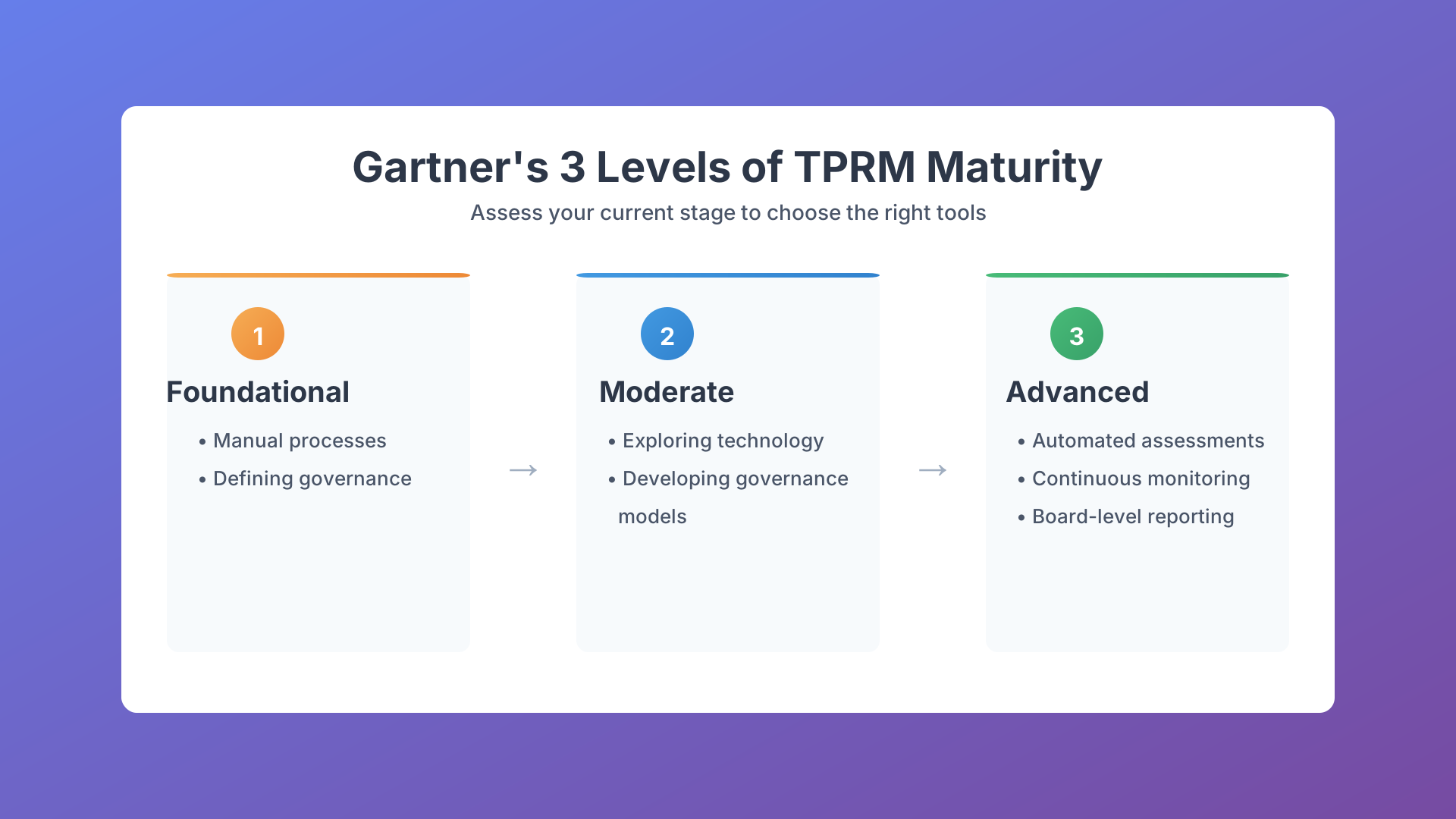
Gartner’s 3 Levels of TPRM Maturity
Organizations must assess their current stage to choose the right tools:
- Foundational: Manual processes; defining governance.
- Moderate: Exploring technology and governance models.
- Advanced: Automated assessments, continuous monitoring, and board-level reporting.
Selecting the Right Technology
Since no single platform does it all, companies should select tools based on Industry (e.g., Health, Finance), Risk Domains (e.g., Cyber, ESG, Corruption), or existing GRC overlap.
- Must-Have Capabilities: Identify risk, measure impact, mitigate issues, continuous monitoring, and reporting.
- The Role of AI: Look for tools that use AI to automate onboarding, review documents, and map fourth-party relationships.
4 Strategic Tips for Success
- Unify Data: Ensure risk data flows easily between teams (Legal, IT, Procurement) to break silos.
- Prioritize Scalability: Choose flexible systems that grow with your vendor list.
- Test First: Define “must-haves” and rigorously test demos before signing.
- Plan Integration: focus on APIs and compatibility with your current tech stack, not just the software cost.

Let’s look at what was covered.
1. TPRM as a Growing Priority Amid Global Complexity
As global operations grow more complex and regulations continue to change, managing third-party risks has become a critical business priority. The expansion of global supply chains and the rise of interconnected third and fourth parties have amplified both internal and external pressures on organizations to manage the risks they bring. TPRM calls for coordination across multiple teams and regions, but organizations that adopt the right third-party risk management platform help them stay ahead of legal, financial, and reputational threats by detecting and resolving issues faster.
External Pressures Driving Adoption
Regulators and stakeholders are demanding ever-greater transparency and accountability in how companies manage third-party risks. The U.S. Department of Justice’s 2024 update to its Evaluation of Corporate Compliance Programs included new guidance on third-party due diligence, while European frameworks such as the CSDDD, GDPR, the UK’s FCA guidelines, and Germany’s Supply Chain Due Diligence Act all emphasize sustainability, data protection, and supply-chain oversight.
Internal Pressures
Boards and executives are increasingly focused on how their organizations assess and monitor third-party and even fourth-party relationships. Legal and compliance teams face growing requests for support with due diligence, screening, and continuous monitoring. At the same time, the rapid adoption of AI tools, both internally and among third parties, has introduced new governance and oversight challenges that heighten the importance of a strong TPRM program.
2. Where are We Now? TPRM Maturity
It’s important for every organization to understand what stage of the TPRM journey they are at. Some will be scoping out their requirements, while others will have mature systems in place, and all will have different levels of resources. It therefore makes sense for them to consider their current level of maturity when looking at what tools they might need. Gartner broadly defines three suggested levels of maturity that organizations can use to get an idea of where they are:
Foundational: Currently discussing third-party risks and establishing governance roles and responsibilities. Deciding what to do and doing most of it manually.
Moderate: Growing their program, exploring a governance model, and choosing technology solutions.
Advanced: TPRM program and governance are active. The organization is considering further growth steps. The goal is to get to the right level of maturity and use the right tools. Key milestones will be:
- Achieving automated risk assessments.
- Continuous monitoring and risk mapping.
- Having board-level reporting capabilities.
3. Choosing TPRM Technology
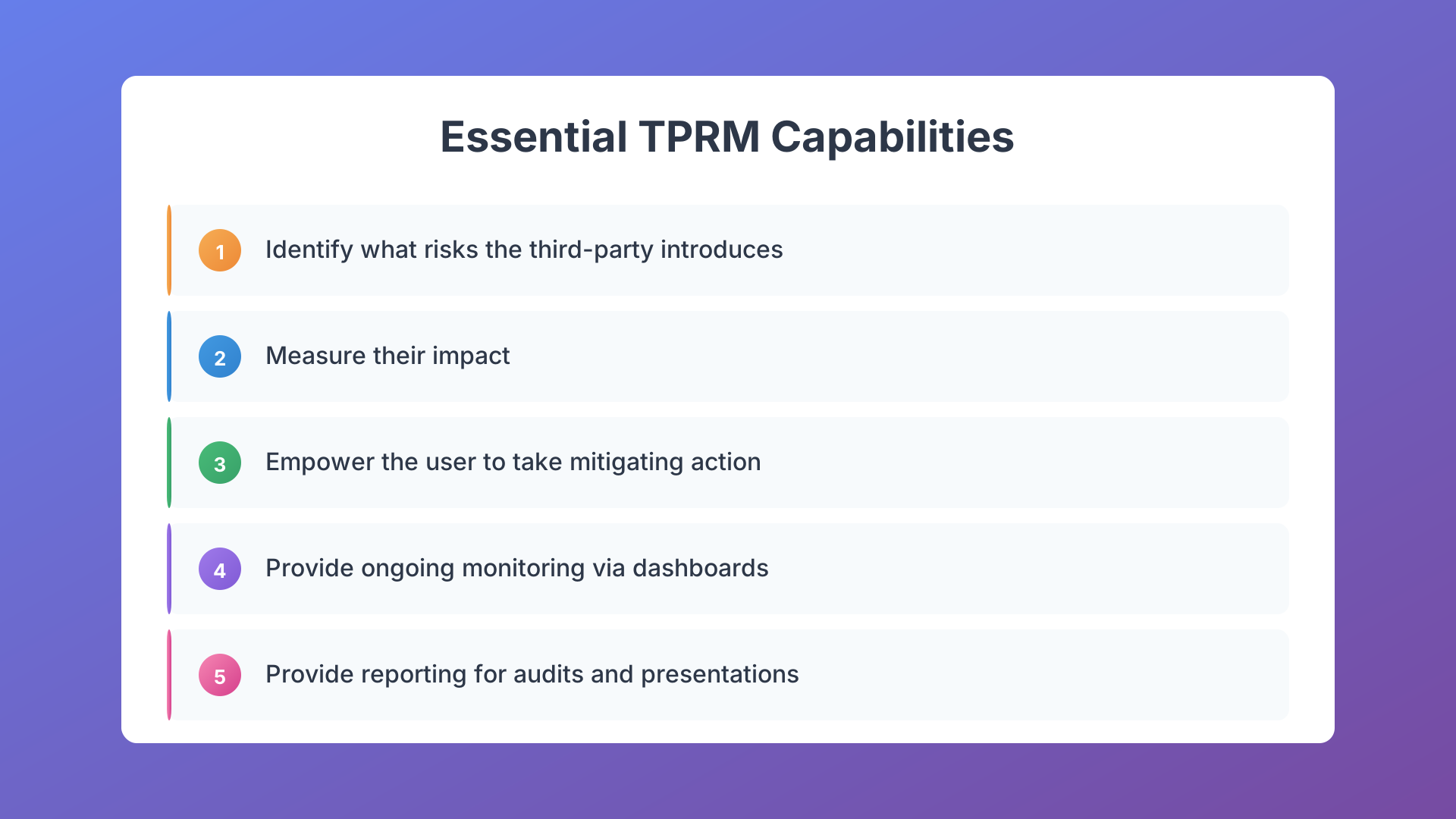
A one-stop shop would be nice, but there’s currently no TPRM platform that can be all things to all businesses. There are dozens of solutions on the market, all catering to different industry areas, risk profiles, and regulatory environments, as well as narrow specialisms within them. With so many on offer, the chances are good that the right solution or solutions are out there but whittling them down to some hopefuls should begin with those that offer essential functionality. A prospective TPRM solution should be able to:
- Identify what risks the third-party introduces
- Measure their impact
- Empower the user to take mitigating action
- Provide ongoing monitoring via dashboards
- Provide reporting for audits and presentations
(It’s hard to resist pointing out that Reflectiz ticks all of these boxes for website supply chain risk management.)
Third-Party Risk Domains
The event highlighted some common risk domains (areas of third-party risk) that may require scrutiny, including:
- Bribery and corruption
- Business continuity
- Security/cybersecurity
- Trade compliance and sanctions
- Capacity
- Business governance
- Regulations and regulatory compliance
- Privacy, data processing, and management
- Concentration
- Geopolitical/geographic risk
- ESG (Sustainability, environmental, social, and governance)
4. Sorting Considerations
Organizations in highly regulated industries like health and finance might be best advised to choose TPRM platforms that are purpose-built to meet their particular compliance needs. Those in other sectors may be able to adopt more generic tools as long as they cover all their needs. If they already have governance risk and compliance platforms (GRC) in place, they may consider adding on optional TPRM tools if available. Some general sorting considerations include:
1. Sort by Risk Areas: Select platforms that can explore due diligence across multiple risk areas (the ‘domains’ listed above) as necessary.
2. Sort by Industry: Choose industry-specific platforms where appropriate and available, i.e., one specializing in health for healthcare providers.
3. Sort by GRC Overlap: Many GRC tools support TPRM processes via additional modules.
At the end of the sorting process, an organization should be able to cover all of its TPRM requirements with a blend of dedicated and bolt-on tools that meet quality and capability requirements. The qualities they should be looking for are:
Usability: does it offer great UI/UX?
Reliability: near-perfect uptime and accuracy?
Efficiency: does it save users time?
Scalability: will it take a rapid increase in the number of vendors to scrutinize in its stride?
Compatibility: does it mesh with the organization’s existing technology stack?
Security: does it raise or reduce risk exposure?

AI and TPRM Solutions
Modern TPRM tools are increasingly using AI to streamline third-party risk management. Buyers should audition these features before committing:
Routine Tasks Automation: Handles repetitive work like onboarding new vendors, running due diligence checks, and sending questionnaires automatically.
Chatbots for Quick Answers: Chatbots can respond to risk-related questions in plain language, saving time for your team.
Reviews Documents Efficiently: The system can read and analyze vendor questionnaires, flagging any missing or unusual information.
Speeds Up Risk Assessments: AI can generate overall risk scores and even suggest ways to reduce or manage identified risks.
Escalates Issues Automatically: Red flags are raised to the right people, along with an assessment of how well existing controls address the problem.
Maps Fourth-Party Relationships: Helps track and understand connections between your vendors and their own suppliers.
Choosing the Right TPRM Technology: Four Simple Tips
Picking the right third-party risk management system takes careful planning, collaboration, and a solid business case. Work closely with key teams – like legal, compliance, risk, audit, procurement, finance, and IT – to assess potential vendors.
1. Make Information Flow Easily
Choose a platform that lets third-party risk data move smoothly between teams. This helps everyone see new risks early, breaks down silos, and avoids duplicate work.
2. Choose a Flexible, Scalable System
Select a solution that can grow and adapt as your TPRM program evolves, both now and in the future.
3. Test Before You Commit
Define your “must-have” features before meeting vendors. Then, thoroughly test the system’s capabilities to make sure it delivers before you sign on the dotted line.
4. Plan for Integration
Work with your IT and security teams to plan how the system will be implemented and connected to existing tools. Look at licensing, APIs, and long-term integration—not just the upfront cost.
FAQs
What external pressures are driving TPRM adoption?
Organizations face mounting regulatory and compliance pressures requiring enhanced third-party oversight. The U.S. Department of Justice’s 2024 update to its Evaluation of Corporate Compliance Programs includes new guidance on third-party due diligence, while European frameworks such as the Corporate Sustainability Due Diligence Directive (CSDDD), GDPR, the UK’s Financial Conduct Authority guidelines, and Germany’s Supply Chain Due Diligence Act emphasize sustainability, data protection, and supply-chain oversight. Regulators across jurisdictions are demanding that companies demonstrate accountability for the risks their vendors introduce, with significant penalties for non-compliance. Stakeholders including investors, customers, and partners also expect transparency about how organizations manage third-party relationships and protect against supply chain vulnerabilities.
What are the three levels of TPRM maturity according to Gartner?
Gartner defines three maturity levels to help organizations understand their current TPRM stage. Foundational organizations are currently discussing third-party risks, establishing governance roles and responsibilities, deciding what to do, and performing most tasks manually without dedicated tools. Moderate maturity organizations are growing their programs, exploring governance models, and actively choosing technology solutions to scale their capabilities. Advanced organizations have active TPRM programs and governance structures in place and are considering further growth and optimization steps. Organizations should assess their maturity level to select appropriate tools and set realistic goals, with key milestones including automated risk assessments, continuous monitoring and risk mapping, and board-level reporting capabilities.
What essential functionality should organizations look for in TPRM technology?
Effective TPRM platforms must deliver five core capabilities regardless of industry or organization size. They should identify what risks each third party introduces through comprehensive due diligence and assessment processes, measure the potential impact of those risks on business operations and objectives, empower users to take mitigating action through workflows and remediation tools, provide ongoing monitoring via dashboards that track risk levels and changes in real-time, and deliver reporting functionality for audits, board presentations, and regulatory compliance. Organizations should prioritize platforms that excel at these fundamentals before considering advanced features, as these capabilities form the foundation of any successful TPRM program.
What are the common third-party risk domains that require scrutiny?
Organizations must evaluate vendors across multiple risk domains depending on their industry and regulatory requirements. Common risk areas include bribery and corruption risks from unethical vendor practices, business continuity concerns about vendor stability and disaster recovery capabilities, security and cybersecurity vulnerabilities that could expose organizational data or systems, trade compliance and sanctions to ensure vendors don’t violate international restrictions, capacity issues related to vendor ability to meet demand, business governance examining vendor management practices, regulatory compliance verification, privacy and data processing practices especially under GDPR and similar laws, concentration risk from over-reliance on single vendors, geopolitical and geographic risks from operating in unstable regions, and ESG factors covering sustainability, environmental impact, and social responsibility. A comprehensive TPRM program addresses all relevant domains for each vendor relationship.
How should organizations approach selecting TPRM technology?
There’s no one-size-fits-all TPRM platform, so organizations should use a systematic sorting process. First, sort by risk areas to identify platforms that cover all relevant domains your organization needs to assess. Second, sort by industry to find solutions purpose-built for highly regulated sectors like healthcare or finance, or more generic tools for other industries. Third, sort by GRC overlap to determine if existing governance, risk, and compliance platforms can be extended with TPRM modules rather than requiring separate systems. The goal is creating a blend of dedicated and bolt-on tools that collectively meet all requirements while evaluating each option for usability, reliability, efficiency, scalability, compatibility with existing systems, and whether it reduces or increases overall risk exposure.
How is AI being used to enhance TPRM solutions?
Modern TPRM platforms increasingly leverage AI to streamline risk management processes and reduce manual workload. AI capabilities include automating routine tasks like vendor onboarding, due diligence checks, and questionnaire distribution, deploying chatbots that respond to risk-related questions in plain language to save team time, efficiently reviewing and analyzing vendor questionnaires while flagging missing or unusual information, accelerating risk assessments by generating overall risk scores and suggesting mitigation strategies, automatically escalating issues to appropriate personnel with assessments of how well existing controls address problems, and mapping fourth-party relationships to track connections between vendors and their suppliers. Organizations should thoroughly test these AI features before committing to ensure they deliver promised value and accuracy.
What are the four key tips for choosing the right TPRM technology?
Successful TPRM technology selection requires careful planning and collaboration. First, make information flow easily by choosing platforms that enable seamless third-party risk data sharing between teams like legal, compliance, risk, audit, procurement, finance, and IT, helping everyone identify risks early while breaking down silos and avoiding duplicate work. Second, choose flexible and scalable systems that can grow and adapt as TPRM programs evolve over time. Third, test thoroughly before committing by defining must-have features upfront and rigorously evaluating whether systems deliver promised capabilities during vendor demonstrations. Fourth, plan for integration by working with IT and security teams to map implementation, assess licensing models, evaluate API connectivity with existing tools, and consider long-term integration costs beyond just upfront pricing.
Why isn’t there a single TPRM platform that works for all organizations?
The diversity of industries, regulatory environments, risk profiles, and organizational needs makes a universal TPRM solution impractical. Highly regulated industries like healthcare and finance face specific compliance requirements that demand purpose-built solutions addressing unique regulatory frameworks. Different organizations prioritize different risk domains – a financial institution focuses heavily on cybersecurity and fraud prevention while a manufacturer emphasizes supply chain continuity and ESG factors. Company size, geographic footprint, vendor volume, and technical maturity also vary dramatically, requiring different feature sets and complexity levels. The dozens of TPRM solutions on the market reflect this reality, with vendors specializing in particular niches, industries, or capabilities rather than attempting to serve every possible use case equally well.
How can organizations measure the success and maturity of their TPRM program?
Organizations should track specific milestones that indicate TPRM program maturity and effectiveness. Key indicators include achieving automated risk assessments that reduce manual effort and increase consistency, implementing continuous monitoring that provides real-time visibility into vendor risk profiles and behavioral changes, developing comprehensive risk mapping that visualizes third and fourth-party relationships and dependencies, establishing board-level reporting capabilities that communicate risk posture to executive leadership, reducing time-to-detect and time-to-respond for vendor-related incidents, demonstrating regulatory compliance through audit-ready documentation, breaking down organizational silos so risk information flows efficiently between teams, and scaling the program to cover growing vendor portfolios without proportional increases in headcount. These metrics help organizations understand program effectiveness and identify areas requiring further investment or optimization.
What role does continuous monitoring play in effective TPRM?
Continuous monitoring is essential for effective TPRM because third-party risks are dynamic rather than static – vendors’ security postures change, new vulnerabilities emerge, business relationships evolve, and regulatory landscapes shift. Point-in-time assessments during onboarding quickly become outdated, leaving organizations exposed to risks that develop after initial due diligence. Continuous monitoring provides ongoing visibility into vendor behaviors, security incidents, financial stability, compliance status, and emerging threats, enabling organizations to detect issues early and respond proactively rather than reactively. This real-time oversight helps organizations track whether vendors maintain agreed-upon security controls, identify concerning changes in vendor circumstances, prioritize remediation efforts based on current risk levels, and demonstrate to regulators and stakeholders that third-party risks remain under active management throughout the relationship lifecycle.
Subscribe to our newsletter
Stay updated with the latest news, articles, and insights from Reflectiz.
Related Articles


Your Website looks great!
But what’s happening behind the scenes?
Discover your website blind spots and vulnerabilities before it’s too late!